630-462-9500
After Hour New Client Telephone Number 630-690-6077
1776 S. Naperville Road, Building B, Suite 202,
Wheaton, IL 60189

-

- Home
- Firm Overview
- Attorneys
- Practice Areas
- Divorce
- What To Expect During Your Divorce
- How To Choose A Divorce Attorney
- Divorce Planning
- Protecting Your Credit During Divorce
- Settlement Vs. Trial
- Alimony / Maintenance
- Unallocated Alimony
- Taxes and Divorce
- Distribution of Marital Property
- Dissipation of Assets
- Retirement Plans, IRAs And QDROs
- International & Interstate Divorce
- Post Divorce Modifications & Enforcement
- Divorce FAQs
- High Net Worth Divorce
- Child Custody
- Child Support
- Collaborative Law
- Mediation
- Family Law
- Appeals
- Criminal Representation
- Divorce
- Testimonials
- Media
- Blog
- Contact

How are QDROs and QILDROs Used to Divide Retirement Assets in a Divorce?
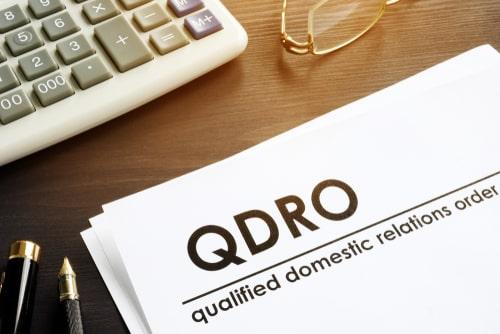
QDROs (Qualified Domestic Relations Orders) and QILDROs (Qualified Income Reduction Orders) are legal orders issued by a court to divide retirement assets between divorcing spouses. If you are getting a divorce, consider working with a qualified Wheaton, IL family law attorney who can guide you through the legal process.
At The Stogsdill Law Firm, P.C., we have more than 100 years of legal experience representing clients in serious matters, including divorce. If you are concerned about what will happen to your retirement assets, our firm can take a firm stance in negotiations on your behalf.
What Is a QDRO?
In Illinois, a QDRO is a legal order that provides instructions for dividing a qualified retirement plan, such as a 401(k) or pension plan, in a divorce. QDROs are considered beneficial tools in protecting retirement accounts' tax benefits.
When a couple gets divorced in Illinois, any retirement benefits earned by either spouse during the marriage may be considered marital property subject to division. This means that the court may order that a portion of one spouse's retirement benefits be paid to the other spouse as part of the divorce settlement.
Why Do People Use QDROs in 2026?
People use Qualified Domestic Relations Orders, or QDROs, to divide certain retirement accounts without creating unnecessary tax problems. In many cases, if someone takes money out of a 401(k), pension, or similar retirement plan before age 59 and a half, that withdrawal may be treated as an early distribution. This can lead to regular income taxes, plus a 10 percent early withdrawal penalty.
A QDRO can help avoid that penalty when retirement assets are divided in a divorce. A divorce decree may say that one spouse should receive part of the other spouse’s retirement account. But the retirement plan usually cannot make that transfer based on the divorce decree alone. A QDRO gives the plan clear legal instructions. It tells the plan how much to pay the other spouse, how the payment should be made, and when the transfer should happen. When handled correctly, the account can be divided without treating the transfer as a simple early withdrawal by the spouse who owns the account.
What Are the Requirements for a QDRO in Illinois?
The QDRO must be approved by the court and the administrator of the retirement plan. The QDRO will specify how the retirement benefits are divided between the parties, such as a percentage or a specific dollar amount. To be clear, you do not automatically receive a QDRO. You must request one, and the court must then approve the request.
A QDRO has four key elements that must be present to be valid. These elements include the following:
-
Identification of the plan: The QDRO must identify the specific retirement plan to which it applies, including the name and address of the plan administrator.
-
Identification of the parties: The QDRO must identify the participant in the retirement plan and the alternate payee.
-
Specification of the amount or percentage: The QDRO must specify the amount or percentage of the participant's benefits to be paid to the alternate payee.
-
Court's signature: The QDRO must be signed by a judge or other authorized official to ensure it is legally enforceable.
An experienced divorce attorney will walk you through the process to ensure everything is done correctly.
Will My Spouse Get Half of My Retirement in an Illinois Divorce?
Illinois does not automatically split every retirement account in half. Illinois uses equitable distribution. That means marital property must be divided in a way the court considers fair, not always equal (750 ILCS 5/503).
Only the marital portion of a retirement account is usually divided. If one spouse had money in the account before the marriage, that part may remain non-marital if it can be traced. The same may be true for certain inherited funds or other separate property. But contributions made during the marriage are usually treated differently. Growth in marital contributions may also be part of the marital estate.
A 50/50 split may be an option in some cases, especially after a long marriage. But the court can consider many factors before making that decision. These may include the length of the marriage, each spouse’s income, each spouse’s needs, the property each person receives, and whether one spouse has more retirement savings than the other.
How Are Retirement Accounts Valued in Illinois?
The value of a retirement account depends on the type of account. Some accounts are easier to value than others. A 401(k), IRA, or similar account usually has a current balance. The parties can review statements and see how much money is in the account on a certain date.
Pensions can be more difficult to assign a value to. A pension may promise monthly payments in the future instead of showing a simple account balance today. In some cases, the spouses may need to look at the employee spouse’s years of service, expected retirement date, benefit formula, and how much of the benefit was earned during the marriage.
The date of valuation also matters. Retirement accounts can rise or fall with the market. Contributions may continue during the divorce. Loans, withdrawals, and rollovers can also affect the final value. For this reason, the spouses should use complete records. Guessing can create unfair results.
Do Retirement Assets Have To Be Divided in an Illinois Divorce?
Retirement assets do not always have to be split account by account. But they do need to be addressed. In Illinois, pension benefits, defined contribution plans, IRAs, and other retirement benefits earned during the marriage are generally presumed to be marital property.
Sometimes, the spouses divide the retirement account directly. Other times, one spouse keeps the full retirement account, while the other spouse receives a different asset of similar value. For example, one spouse may keep more home equity while the other keeps more retirement savings. This can work, but only if the values are carefully reviewed.
Retirement division should not be treated like simple math. Taxes, penalties, future growth, and plan rules can all change the real value of an account. A fair agreement should explain what is being divided, what date is used for valuation, who prepares the QDRO if one is needed, and how gains or losses will be handled before the transfer is complete.
What Makes a QILDRO Different From a QDRO?
QILDROs are controlled by Illinois state law. QILDROs are generally used when a spouse works for the state of Illinois or Chicago and thus has a retirement account through SERS, the State Employees Retirement System. Through the QILDRO, the order will direct SERS to allocate a specific portion of a member's retirement benefit to an alternate payee. This alternate payee is usually the former spouse, but not always. Please be aware that a QILDRO is designed to terminate when the participant dies or an alternate payee dies.
Contact Our DuPage County, IL Divorce Lawyers Today
The division of retirement assets can be a highly complicated process. To help ensure the process is done lawfully, contact the experienced Wheaton, IL family law attorneys with The Stogsdill Law Firm, P.C.. Call 630-462-9500 for a private consultation.










Contact Us To Schedule A Consultation With An Attorney At Our Firm
Call 630-462-9500 or provide your contact information below and we will get in touch with you:
The Stogsdill Law Firm, P.C.
1776 S. Naperville Road, Building B, Suite 202Wheaton, IL 60189630-462-9500